La Mur 7 polyphonic compositions for moulting 02.12.2022 -13.02.23
Exhibition
Leechquartier, Afro-asiatisches Institut, Graz AT
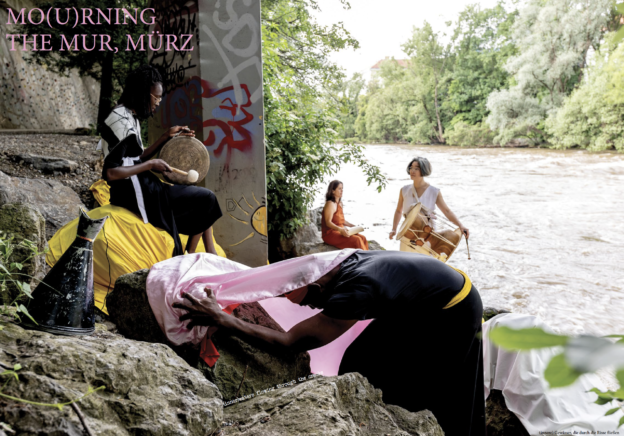
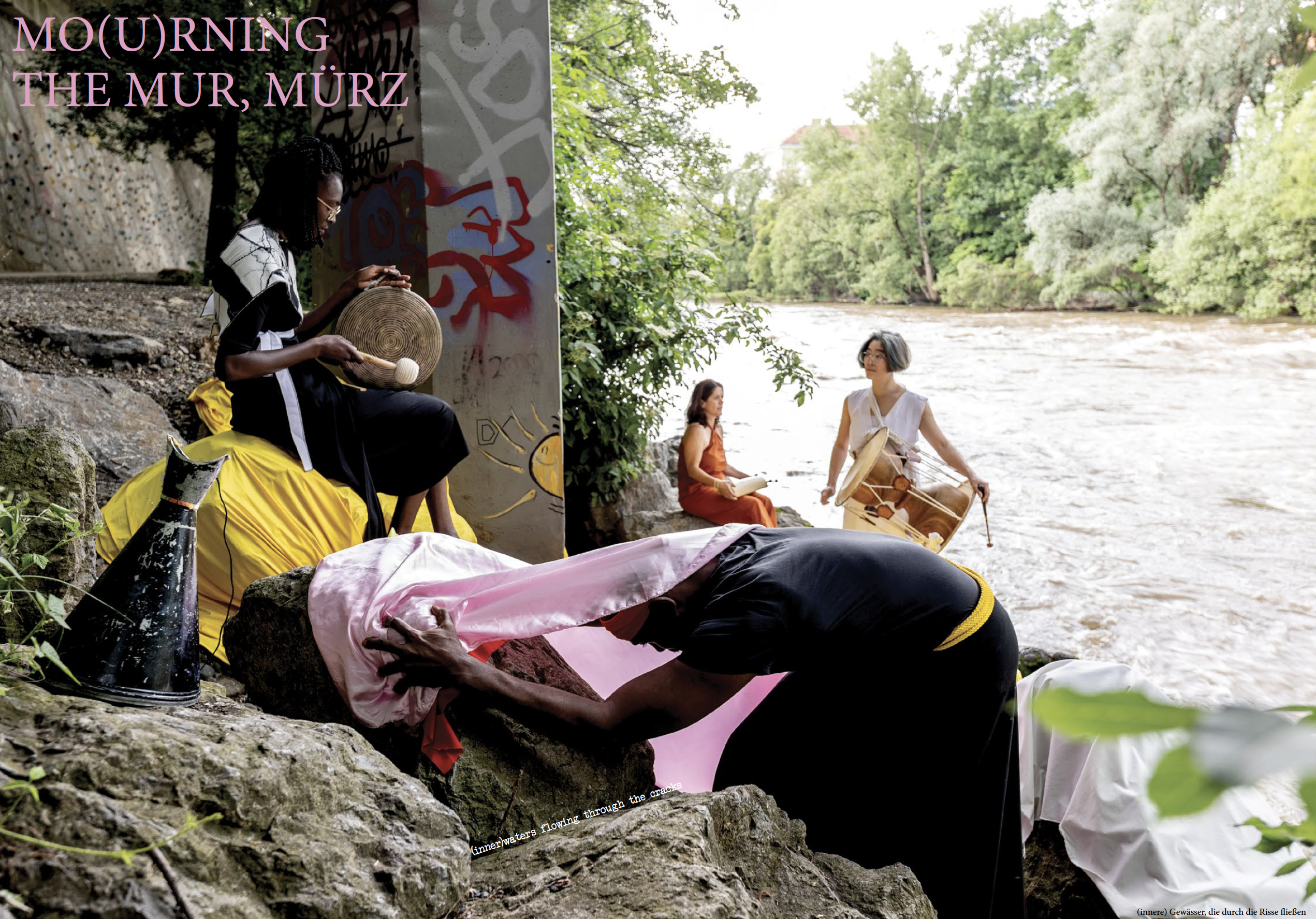
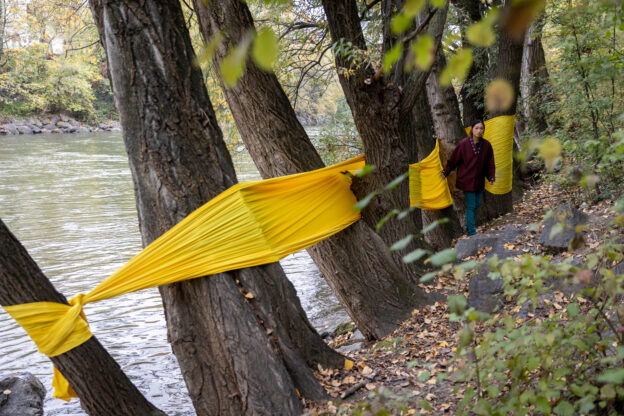
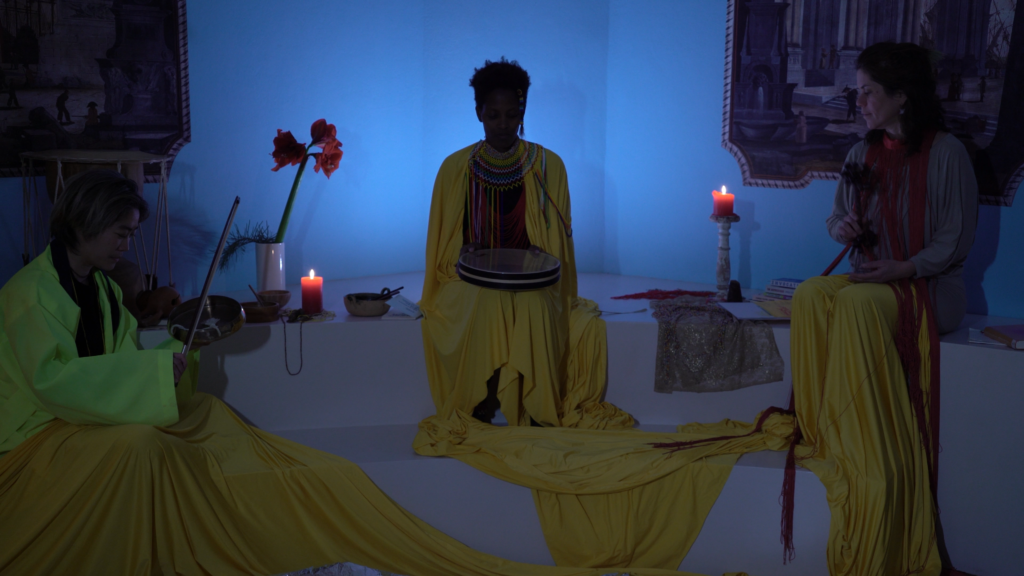
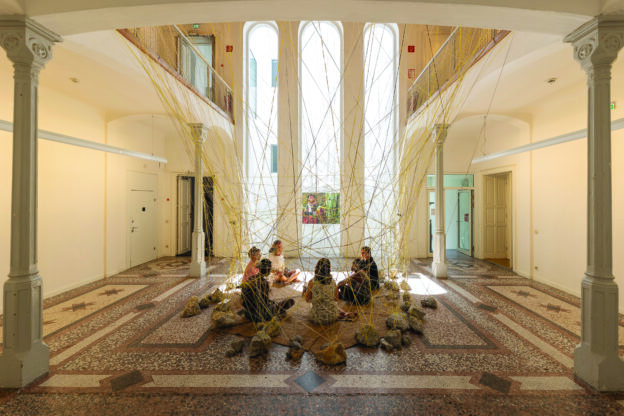
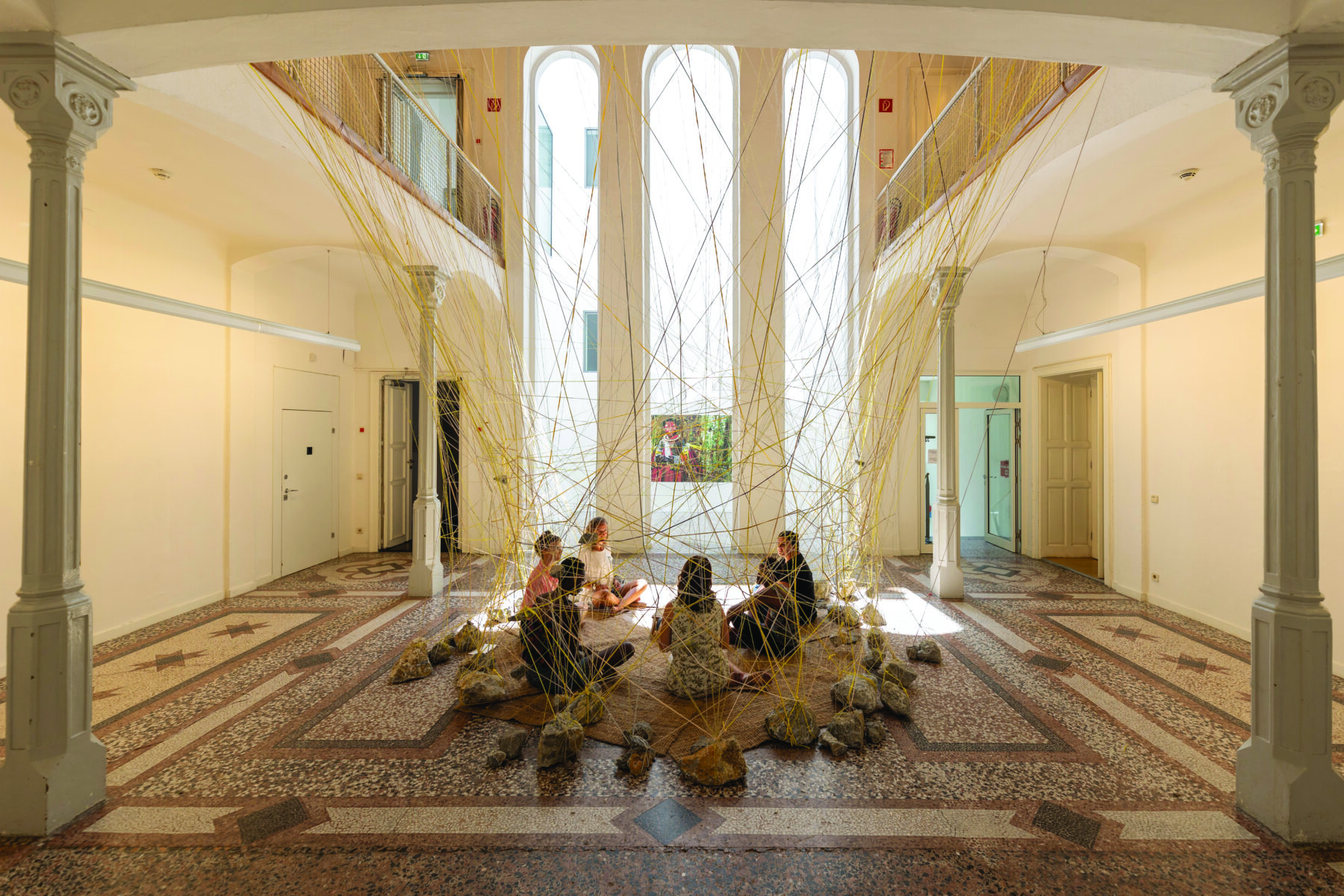
An immersive exhibition, a multi-layered, multi-language offering in the form of a polyphonic spatial-sound composition, an audio-visual collage made from an equally immersive process of questioning and re-framing the ways we are in relation with ourselves; with our ancestors, with the land and with the waters. In this case, the Northern Limestone Alps, the Mürz and the Mur rivers. It is an offering, a ritual, a shedding process of getting rid of the dead skins in our bodies and our thoughts, it is an intuitive need for moulting.
It is the courage of doing it together with all our vulnerable facets inhabiting the cracks for a while and to embark into the not-knowing. Getting rid of the myth and systematic imposition of separation, of extractivist and exploitative relations we grew up with. Can we make kin otherwise? Can we, (up)rooted people grow roots and ground ourselves elsewhere? Can we synchronise, for a moment, how our inner and outer waters flow? Can we fall in love with the Mur, unconditional love for its flowing and its grounding?
with Abiona Esther Ojo, Daniela Brasil, Hyo Jin Shin, Mandy Mozart, Otto Oscar Hernandez, Peninah Lesorogol, Se-Rok Park & the kids Gloria, Mariana, Melvin & Yuri.
A co-production of Daily Rhythms Collective and the Afro-Asian Institute, Graz
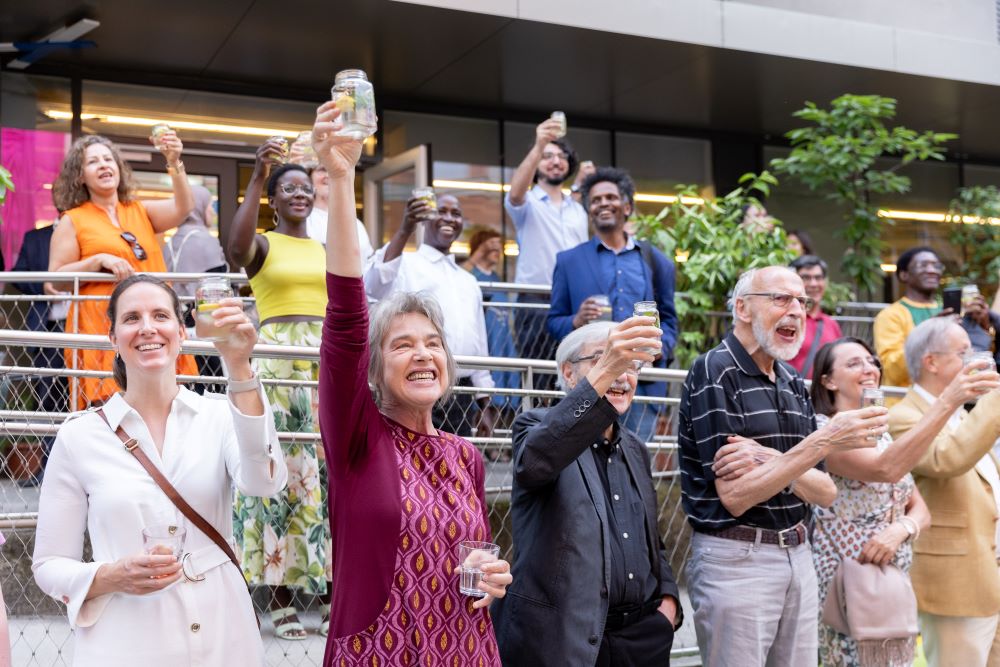
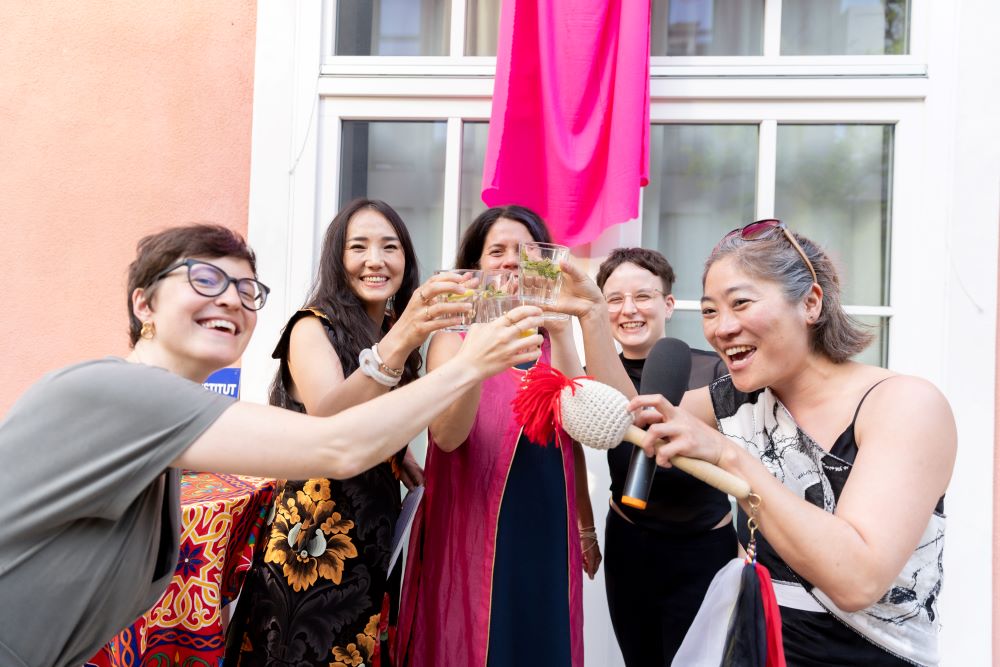
Brinde Rosa Choque – Let’s propose a Toast 60th anniversary AAI Graz
20.06.2024
mit Daniela Brasil, Hyo Jin Shin, Mandy Mozart, Lisa Reiter und Otto Oscar Hernández Ruiz
THE WEAVE SALON 2022 Dancing with the rivers, listening to the roots
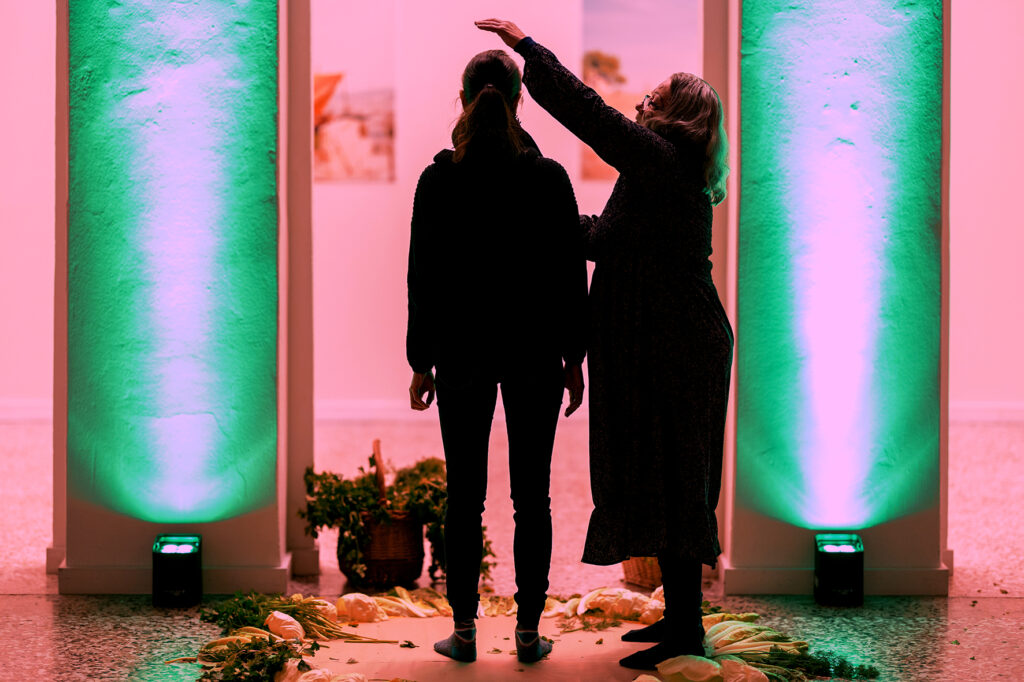
20th Weave Salon: Healing Circle
with Consuelo Méndez Wayuú
13 December 2022
Afro-Asiatian Institute Graz
The performance is part of the exhibition
„La Mur: seven polyphonich compositions for moulting”
The circle is made of leaves, the healing starts with the act of accepting the invitation and entering a small sacred space. Consuelo chants Yorubá songs and uses special herbs, selected as the person enters the space and she feels the energy. Wayuú ancestors of Consuelo, as well as her intuition guide the ceremony. As a visual artist with a feminist and activist career, Consuelo weaves through this performative practice, embodied wisdom and spiritual aesthetics.
19th Weave Salon: Sensus ludens – Homo communis
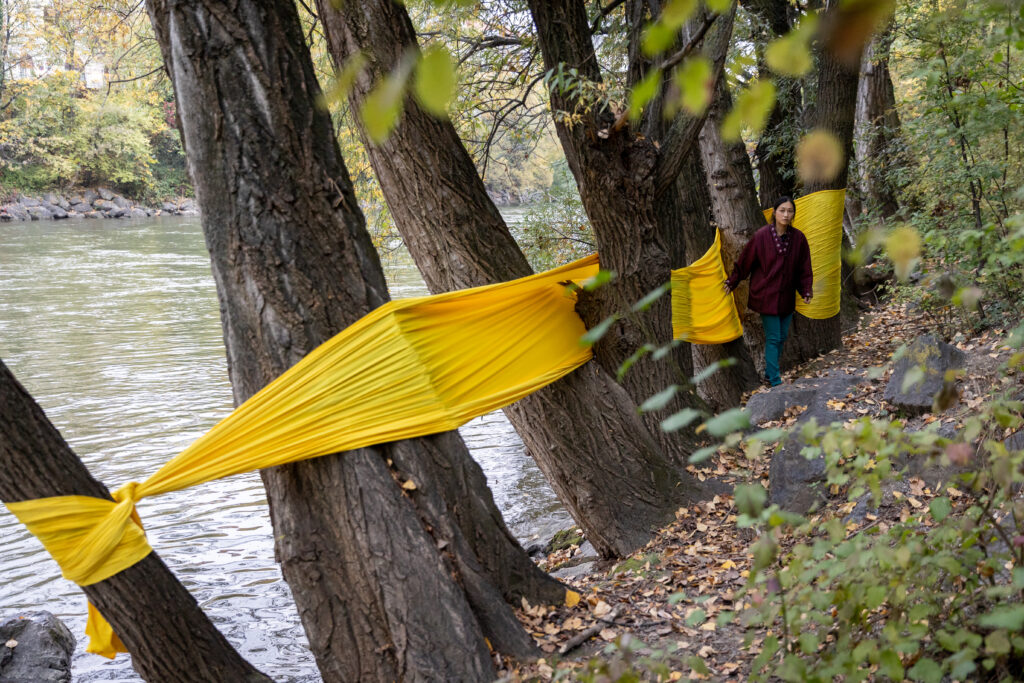
a walking performance with Se-Rok Park & the Mur
12 Oktober 2022
Spektral, Lendkai 45 Graz
In solidarity with the day of indigenous resistance, we invite you to a performative experiential Walk with and around the Mur River, a border-transgressing entity, that flows through diverse landscapes and has survived several havocs throughout its history. In this Co-Creation with the bodies of water, the river’s and ours, we will walk, sound, play, listen, improvise, perceive and move together as well as for oneself in reciprocal ways with a sense of playfulness and maybe a feeling of connection.
THE WEAVE SALON 2021
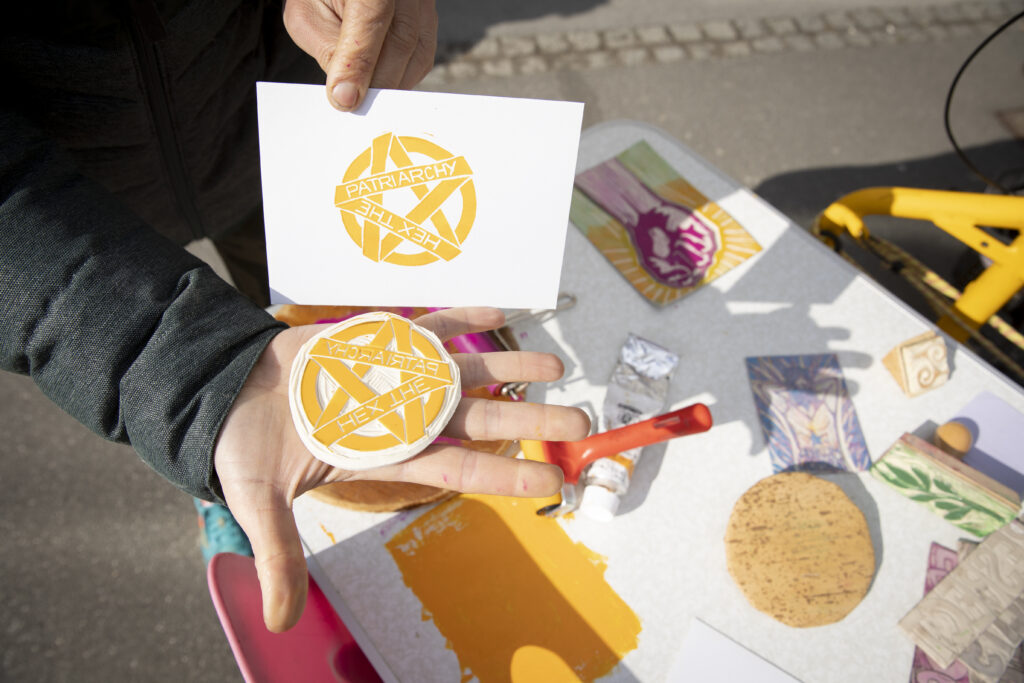
Hex the Patriarchy //* Healing Protocols
WITH Daniela Brasil, Hyo Jin Shin, Otto Oscar Hernandez, Peninah Lesorogol and Mandy Mozart An emergent ritual, an ancestral futuristic performance, a voicing exercise or perhaps an inquiry on the relations between sugar, coloniality and our personal personal stories.
due to the Lock-down measures, this Weave inaugurated a more intimate, ritualistic and performative format, available in a video-piece.
xxxxxx
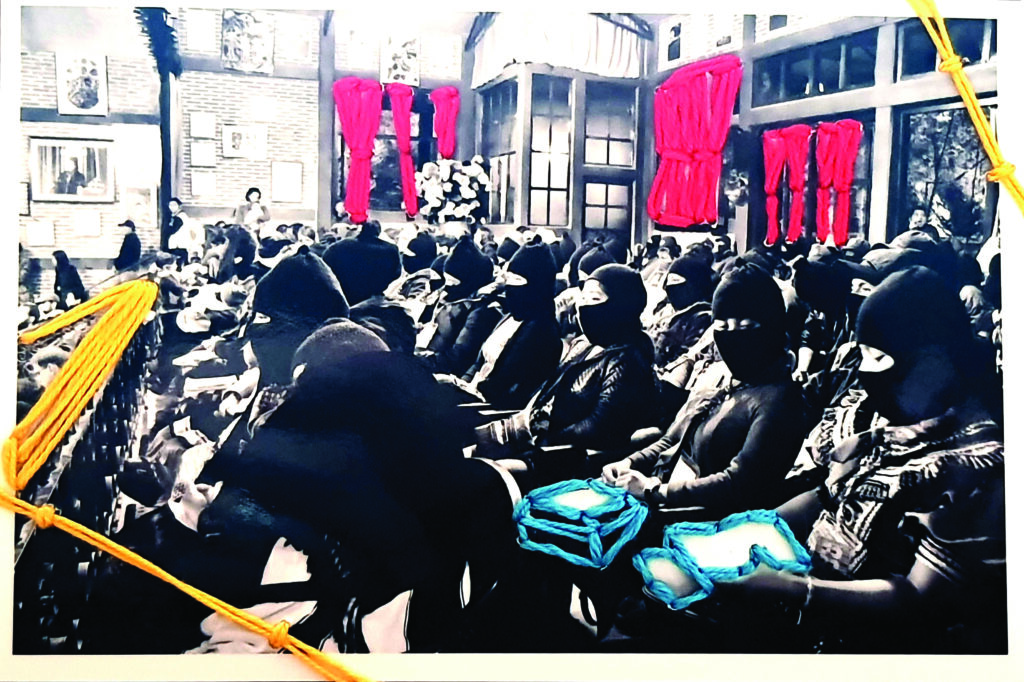
Centro Indígena de Capacitación Integral CIDECI – San Cristobal de las Casas 2019 (Chiapas, México). Foto: Vito Maria Raspanti, embroidery Terlizzi Cataldo (hospitality network Gira Puglia Basilicata)
17th Weave Salon: Rebellion für das Leben // When the Roots start moving 5, 6 October 2021 Zapatistas Reise in Europa – Jugendzentrum Explosiv
in Collaboration with Zapalotta and the Zapatistas Willkommenskommittee Graz
WITH Alessandra Pomarico & Nikolay Oleynikov // Music Akadiy Kot Band
presentation of the book: “When the Roots start moving. Navigating backwards: Resonating with Zapatismo” published by Archive Books and Free Home University, 2021
xxxxxx
16th Weave Salon: Stories from Abya Yala
17 September 2021 – Commenting the artworks Dioses de America & i yõ kikre // Lichtung
Exhibition Entanglements in Afroasiatisches Institut Graz:
WITH Antonio Briceño, Daniela Brasil & Nayarí Castillo // Music by Jorge Castizaga & Pedro Campoverde
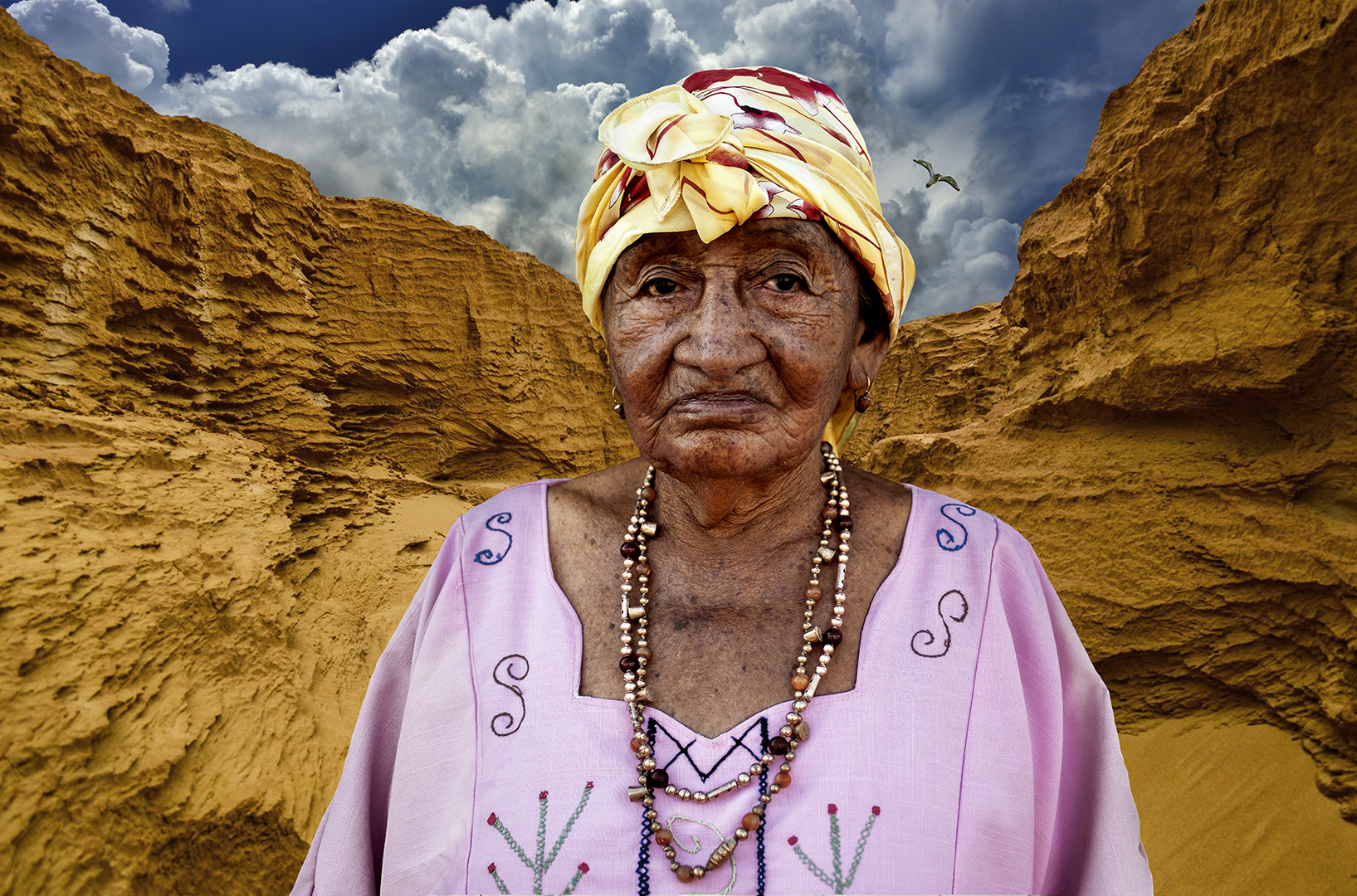
Outshi, La piache. Cultura Wayuú. Dioses di America, Foto Antonio Briceño. She masters the ancestral knowledge that enables the healing of illnesses and the resolution of problems.
xxxxxxx xxxxxxx xxxxxxx
THE WEAVE SALON 2015-17
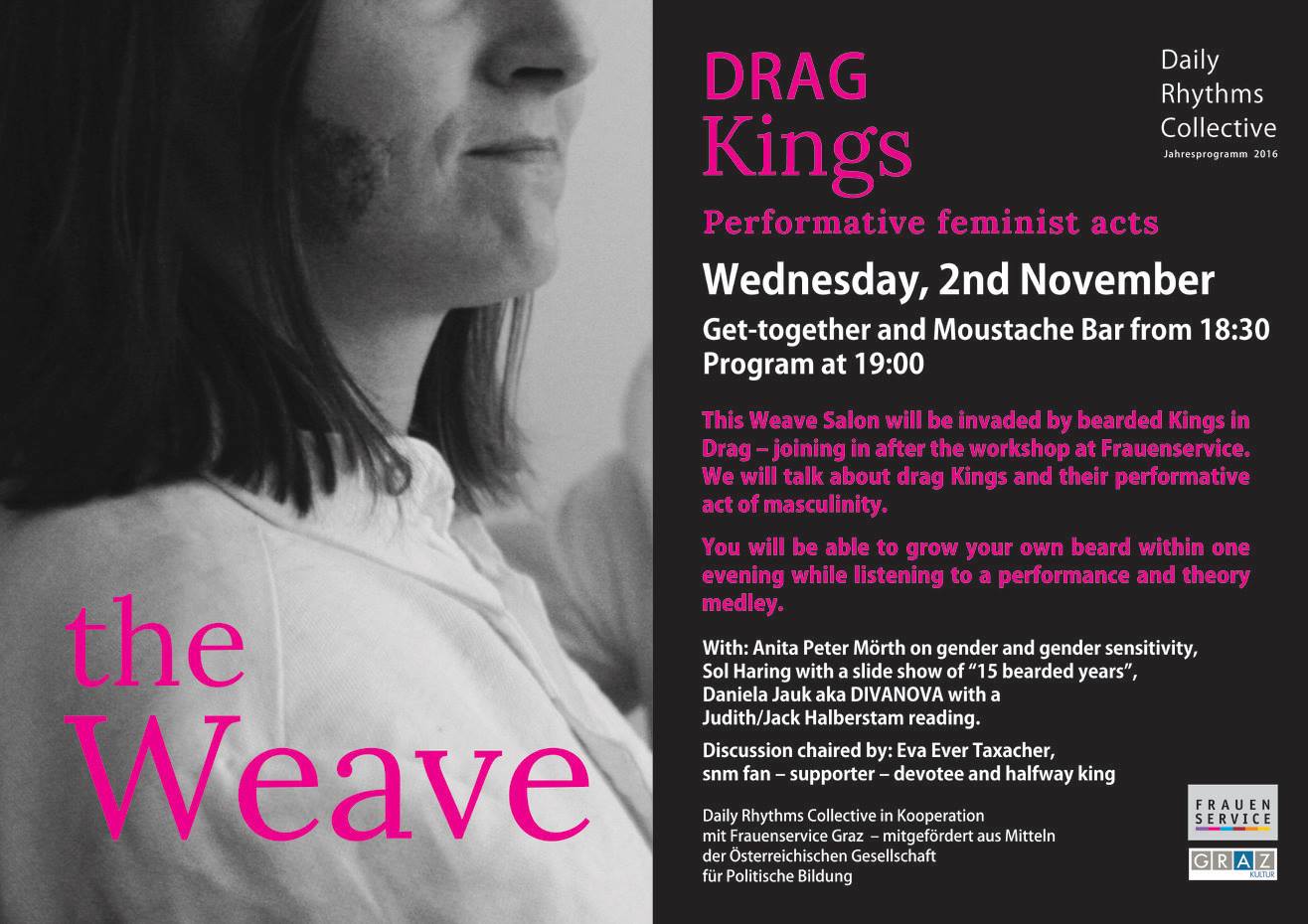
Staged monthly from April 2015 at the Daily Rhythms studio in the Glacistrasse, the Weave was a cultural salon to explore women’s issues and different strands of feminisms from theoretical and practical perspectives, while also providing opportunities for women from the cultural and art scene and all backgrounds to network in a relaxed and friendly environment. A small feminist library has been established for attendees and members. Weave salon events incorporated relevant talks by experts and academics, performances by musicians and performance artists, pertinent exhibitions, workshops and presentations.
Themes for events over the year 2015/2016 have included:
online harassment; women and migration; cis and transgender feminisms; body image;
age and sexuality; diverse masculinities; reclaiming public space,
feminist perspectives on visual art with a focus on Graz-based artists…
Among the guest speakers, performers and artists were:
Sol Haring, Daniela Jauk, Margarethe Maierhofer-Lischka, Senta Bremstein, RESANITA, Katja Cruz, Eva Ursprung, Irina Karamarkovic, Reni Hofmüller, Huda Takriti, Sazgah Salih, Veza Fernandez, Elif Yalcinkaya, Caroline List, Tatjana Petrovic, Gudrun Jöller, Eva Taxacher, Elena Muti, Eva Wagner, Stefanie Egger, and many others.
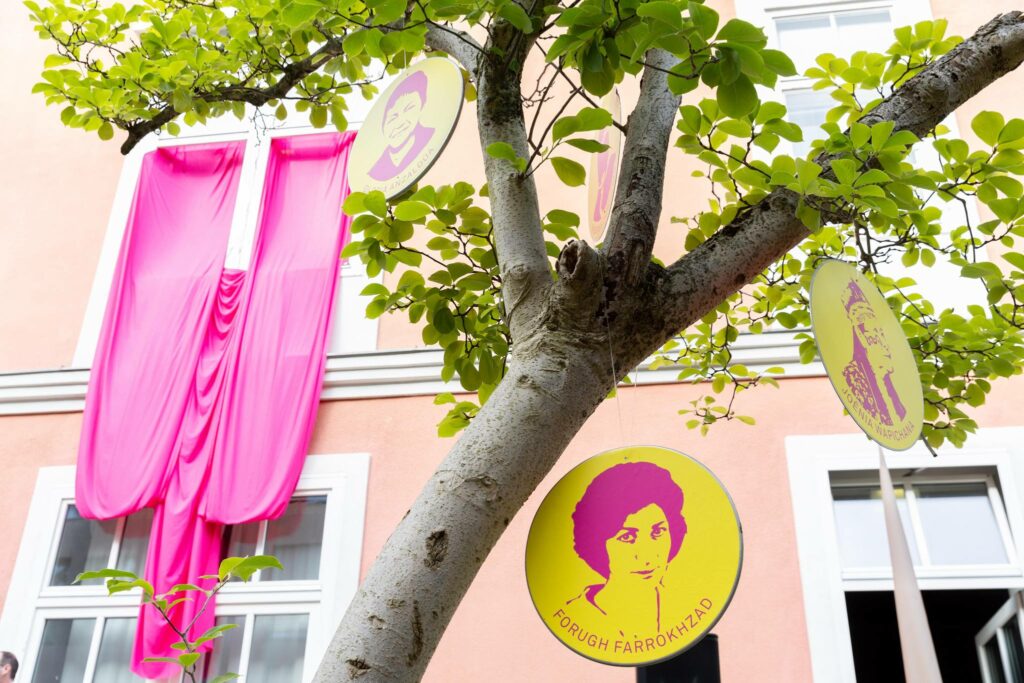
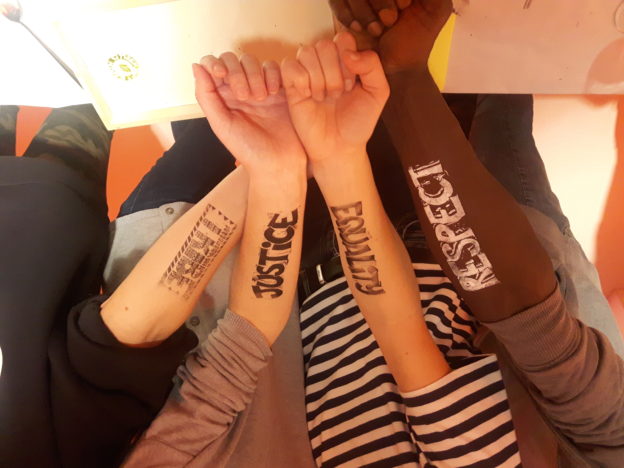
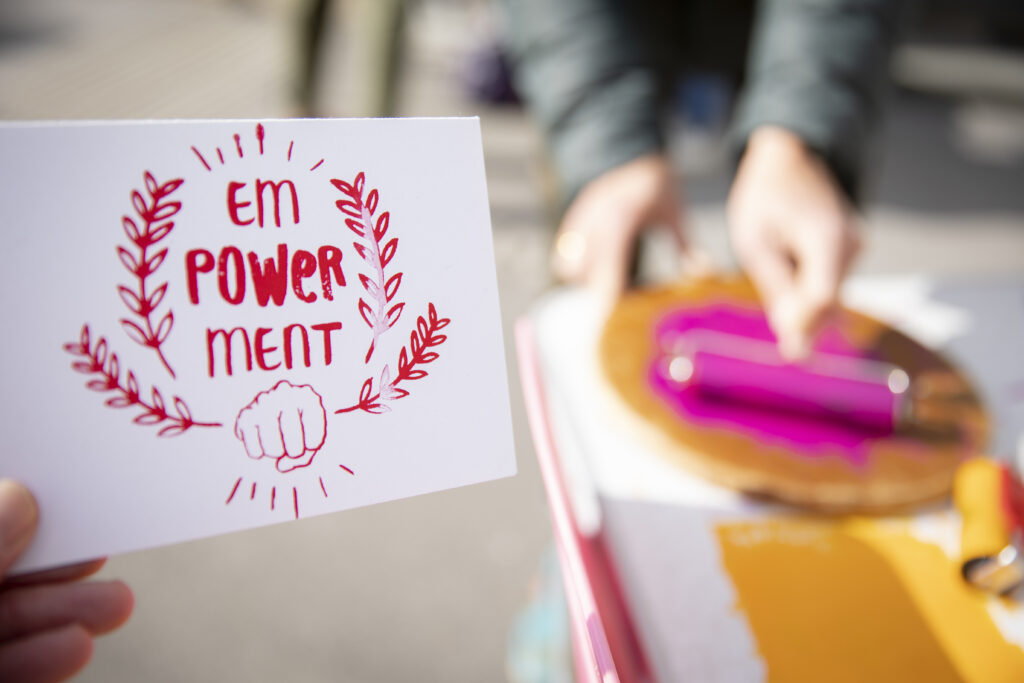
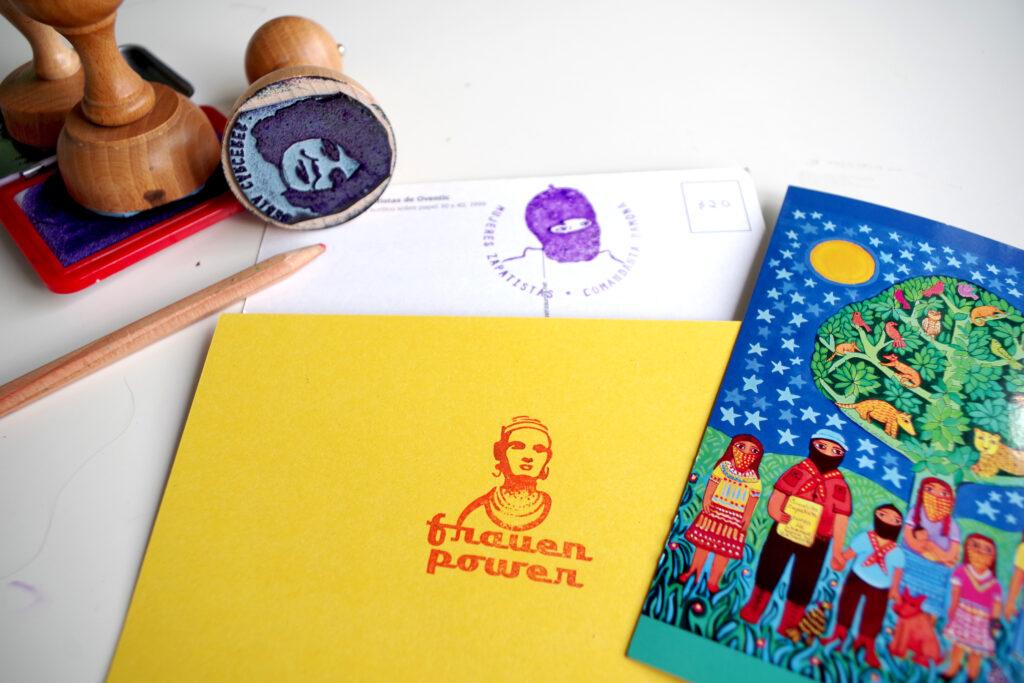
The print bar is a participatory project that discusses the topic of equality and emancipation within workshops with various groups, including migrant and vulnerable communities. Out of these conversations, texts and graphic works are co-created and/or re-appropriated into visual messages, also in various languages. Relevant people representing particular voices of change and resistance are also depicted, especially within struggles against racism, sexism, and colonialism.
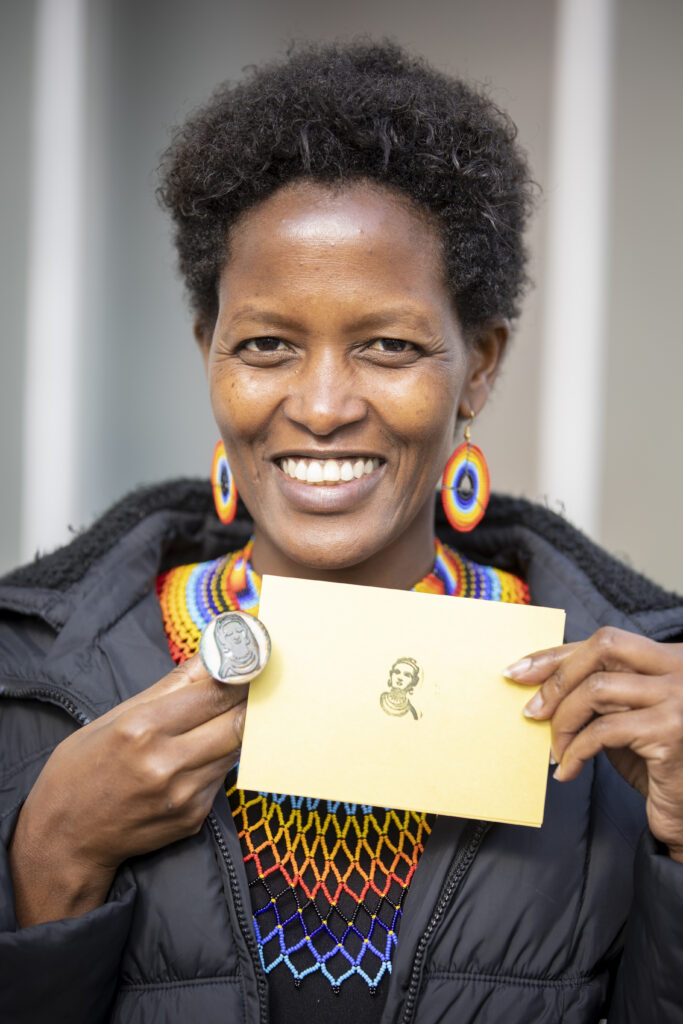
Images and messages are available to the public through silkscreen, linocuts, and stamps. The print bar pops up in different places inviting passers-by to print the motifs they identify with. The prints are made in t-shirts, notebooks, postcards and bags, small gifts to spread the word around.
For Workshops and Events, contact us dailyrhythmscollective (at) gmail.com
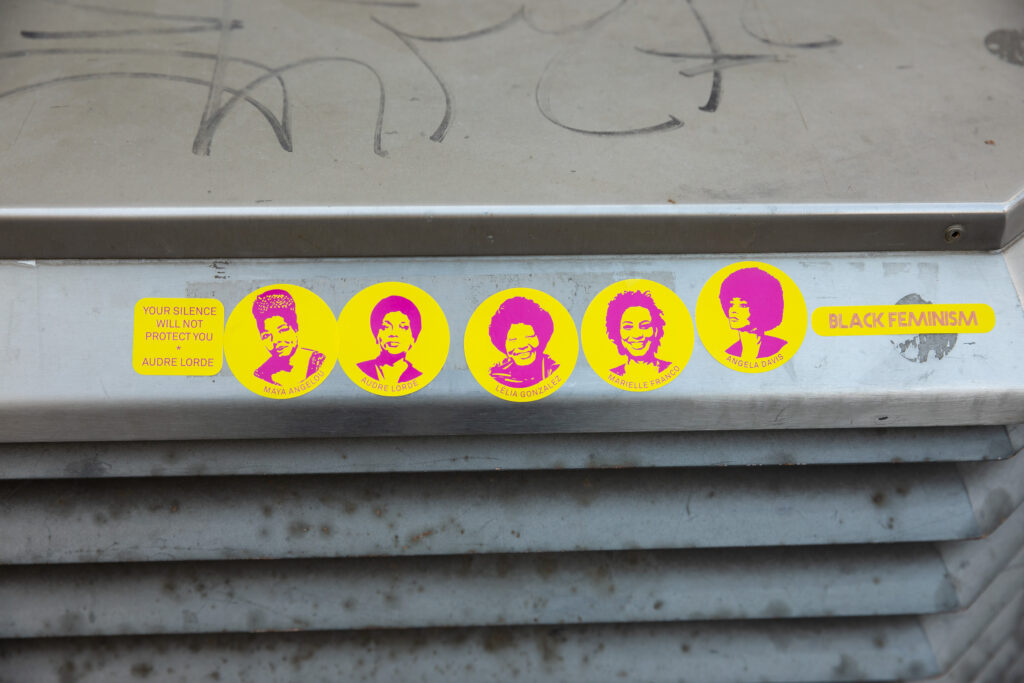
HUMAN AND EARTH RIGHTS DEFENDERS – WOMEN STAMPS COLLECTION
>>>> watch the video of the Women Stamps Collection here
The PrintBar is aligned with Decolonial Feminism – for widening our world views and political imaginaries, and therefore the project highlights a plurality of voices and worlds beyond Eurocentric and White Feminism.
The Women Stamps Collection started as an act of commemoration after the brutal murder of Marielle Franco just before the presidential elections in Brazil in 2018. Now it includes Joenia Wapichana, Berta Cárceres, Comandanta Ramona y las Mujeres Zapatistas, Angela Davis, Maya Angelou, Wangari Maathai, Vandana Shiva, Lélia Gonzalez, Audre Lorde, Gloria Anzaldúa and Rigoberta Menchu.
If you want to contribute and suggest someone, please write to us:
dailyrhythmscollective (at) gmail.com
WORKSHOPS
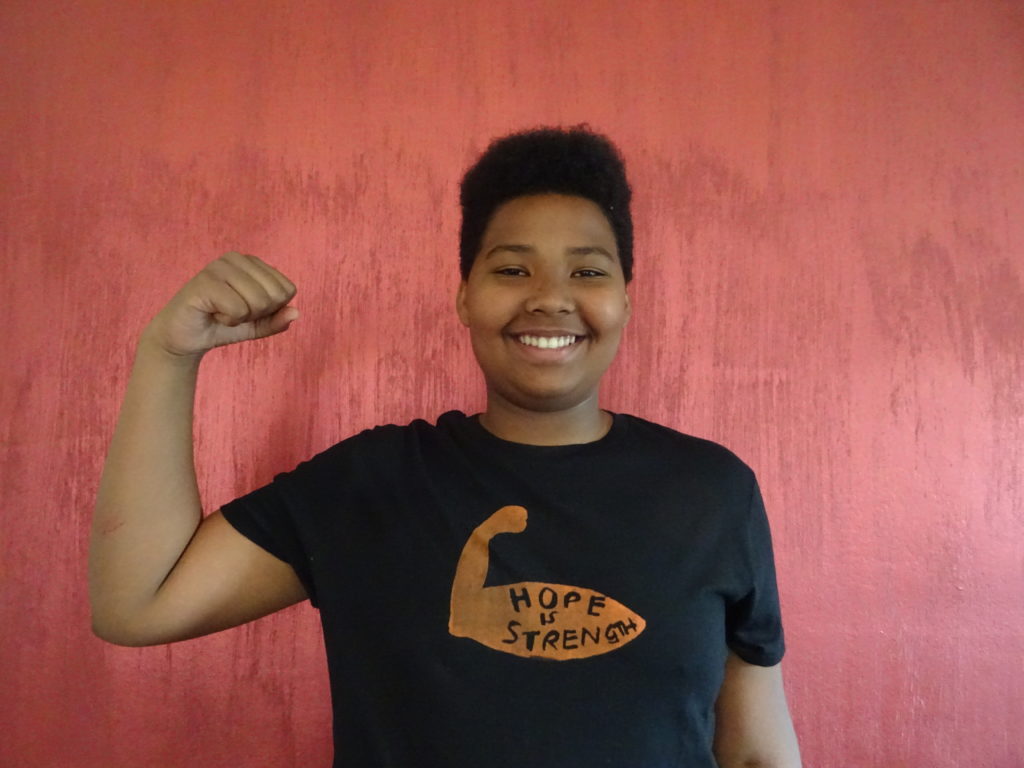
David with his own design, Triesterstr, 2019
PUBLIC PRINTING EVENTS
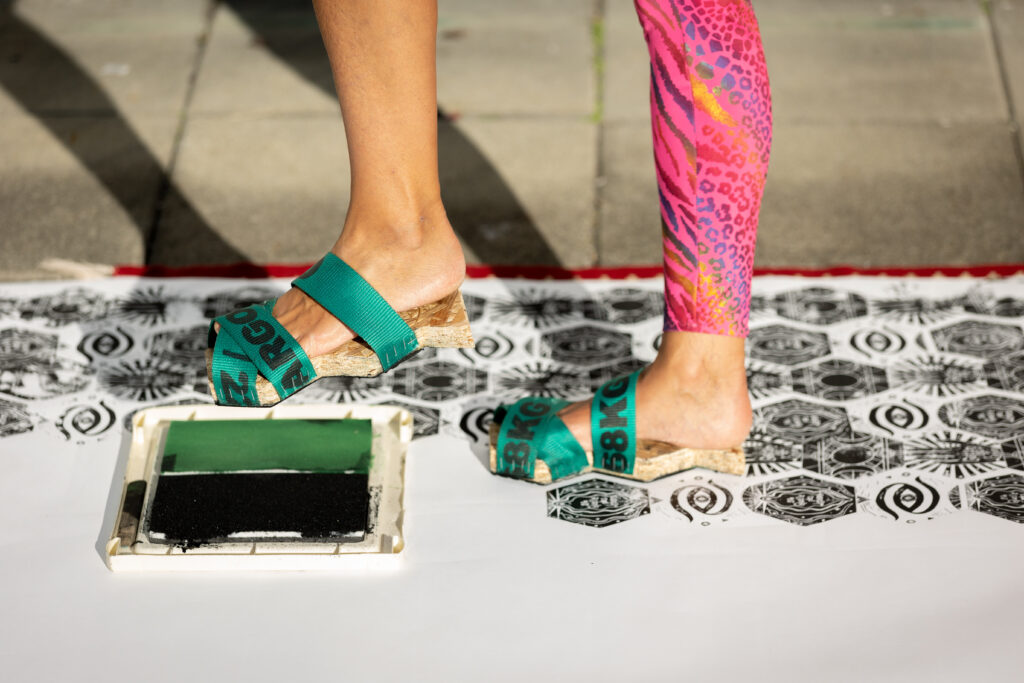
PRINT-WALKING MEDITATION
Katcha Bilek’s print-walking meditation: ‘The earth is a woman, and my uterus, the universe.’
This project is being realised since 2017 in Graz and abroad,
in collaboration with different partners
The Entanglements Co-Creation Workshop is a cross-cultural and extra-disciplinary circle for experimentation, exploring forms of weaving that enable the building of deeper relationships and critical questions to our society. It is an immersive space to collectively (re)search more balanced and regenerative ways of living together – between the human and the non-human, the sacred and the scientific, beyond the boundaries that systems of oppression and competition continually impose on us. Participants are invited to bring their biographies, quests and struggles to be woven into this “safe-brave” space. This is shaped by emergent methodologies; sensorial, sensible, embodied practices of tuning in and the mapping of investigatve paths. The challenge is to align personal researches and paths into an entangled co-creation of collaborative artistic outcomes.
co-creation workshop / Neuberg an der Mürz & Graz, 2-7 June 2022 Exhibition: 01. December 2022 – 13. February 2023 co-production: Afro-Asian Institute Graz/ Daily Rhythms Collective
concept and coordination: Evelyn Tschernko, Daniela Brasil
participants: Daily Rhythms Collective (Daniela Brasil, Hyo Jin Shin, Otto Oscar Hernández, Peninah Lesorogol), Afro-Asiatisches Institut (Evelyn Tschernko), Esther Abelina Ojo, Se-Rok Park, Tilmann Porschütz. & the kids: Gloria, Mariana, Melvin & Yuri
hosted by Neuberg College
co-creation workshop / Graz, 23-30 June 2021 Exhibition 01. July – 29. September 2021 co-production: Afro-Asian Institute Graz/ Daily Rhythms Collective
concept and coordination: Evelyn Tschernko,Daniela Brasil & Lisa Reiter
participants: Abelina Holzer, Antonio Briceño, Clarissa Rêgo, Daily Rhythms Collective (Daniela Brasil, Katcha Bilek, Nayarí Castillo), Afro-Asiatisches Institut (Evelyn Tschernko) Esther Abelina Ojo, ILA, Karin Lernbeiss, Lisa Reiter, Otto Oscar Hernández, Peninah Lesorogol
photography: Nikola Milatović
video Trilogy, Chapter 2: Trümmer
co-creation workshop / Graz, 22-26 June 2020 Exhibition 27. June – 9. September 2020 co-production: Afro-Asian Institute Graz/ Daily Rhythms Collective concept and coordination: Evelyn Tschernko, Daniela Brasil & Nayarí Castillo
participants: Abelina Holzer, Afro-Asian Institute (Evelyn Tschernko), Clarissa Rêgo, Daily Rhythms Collective (Daniela Brasil & Nayarí Castillo), Lisa Reiter, Otto Oscar Hernandez, Peninah Lesorogol, Studio Magic (Judith Urschler, Max Kieninger, Patricia Wess, Thomas Kain)
photography: Nikola Milatović
video Trilogy, Chapter 1: Summen
BETWEEN BORDERS AND FLOWS A PROJECT FOR GRAZ KULTURJAHR 2020
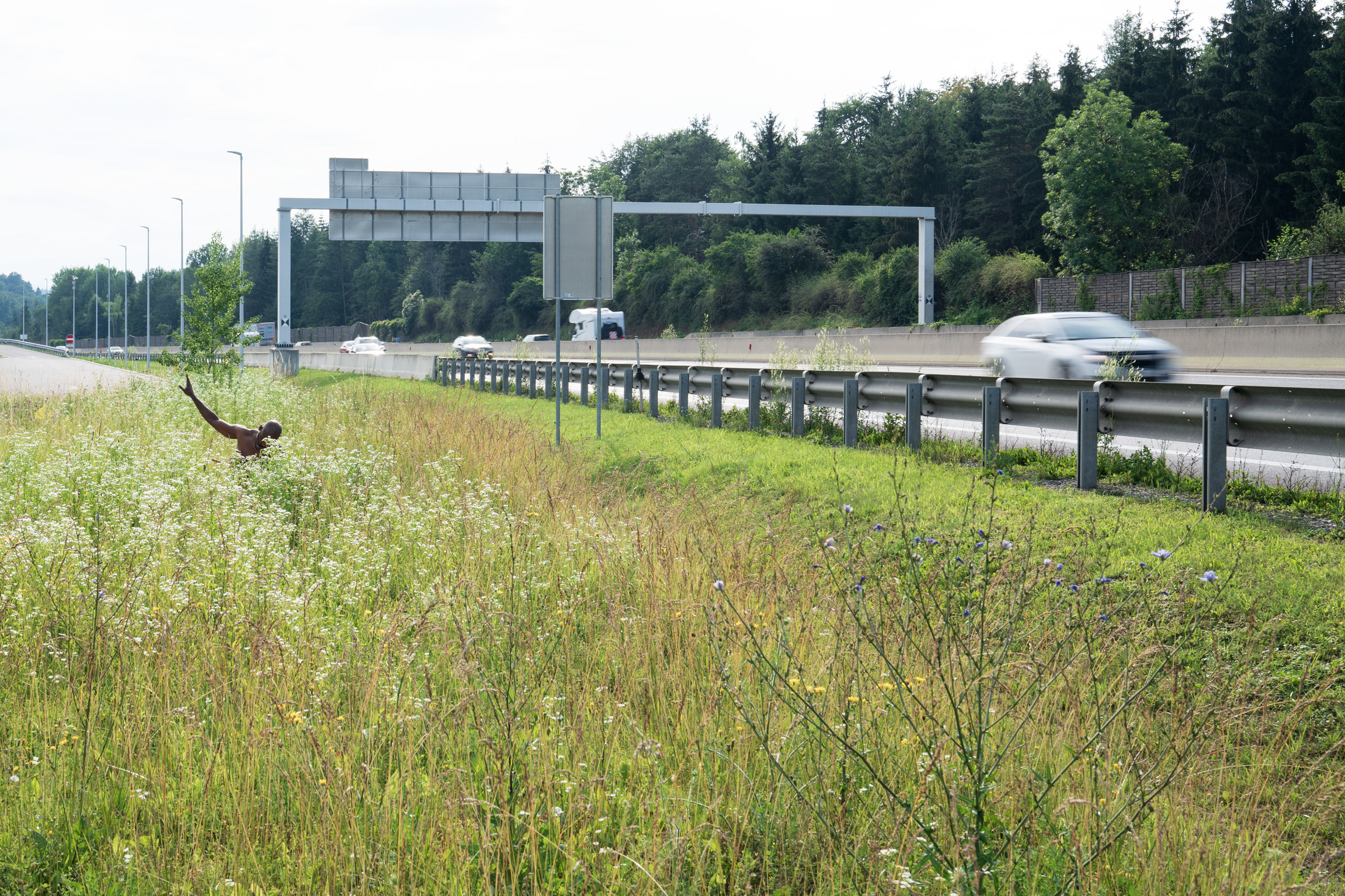
Summen, Clarissa Rêgo & Otto Oscar Hernández. performance Summer 2020 / A2 SüdAutobahn Foto: Karin Lernbeiss
Homeostasis is the mechanism by which organisms or systems sustain balance, or return to balance when needed. This natural regulation engine aims in maintaining a dynamic equilibrium while evidencing the interrelatedness of all the parts that constitute the natural machine. This project proposes the phenomenon of Homeostasis as a metaphor to address the actual need to restore balance within our complex living environments – or the entanglements of individual and collective bodies and actions, human and other-than-human, borders and flows, on the local and global levels. It establishes an expanded artistic/ pedagogical format to bring together local and international artists, ecologists, urbanists, and earth-rights defenders to reimagine the entanglements of ecology and urbanity while debating and co-creating artistic works in forgotten spaces.
Homeostasis focuses on spaces on the edges of Graz — micro-forests and green areas circumscribed by highways roundabouts, located near the city’s borders; using them as physical exploration devices to inquire around systemic change, and indispensable alterations to the ways we see, behave and act within nature. On those spaces, life-flows do not follow the standardly imposed administrative borders. These artificial lines have been historically a topic of conflict within political, urbanistic, and ecological discourses, as they do not follow the coherent mechanism of regulation of ecosystems. Concepts as “making kin” and “urban metabolism”, essential references for the research, debate, and artistic outputs, will be formulated and speculated upon, expanding our senses of (inter)connection in a post-human world.
Public interventions Spring & Summer 2021:
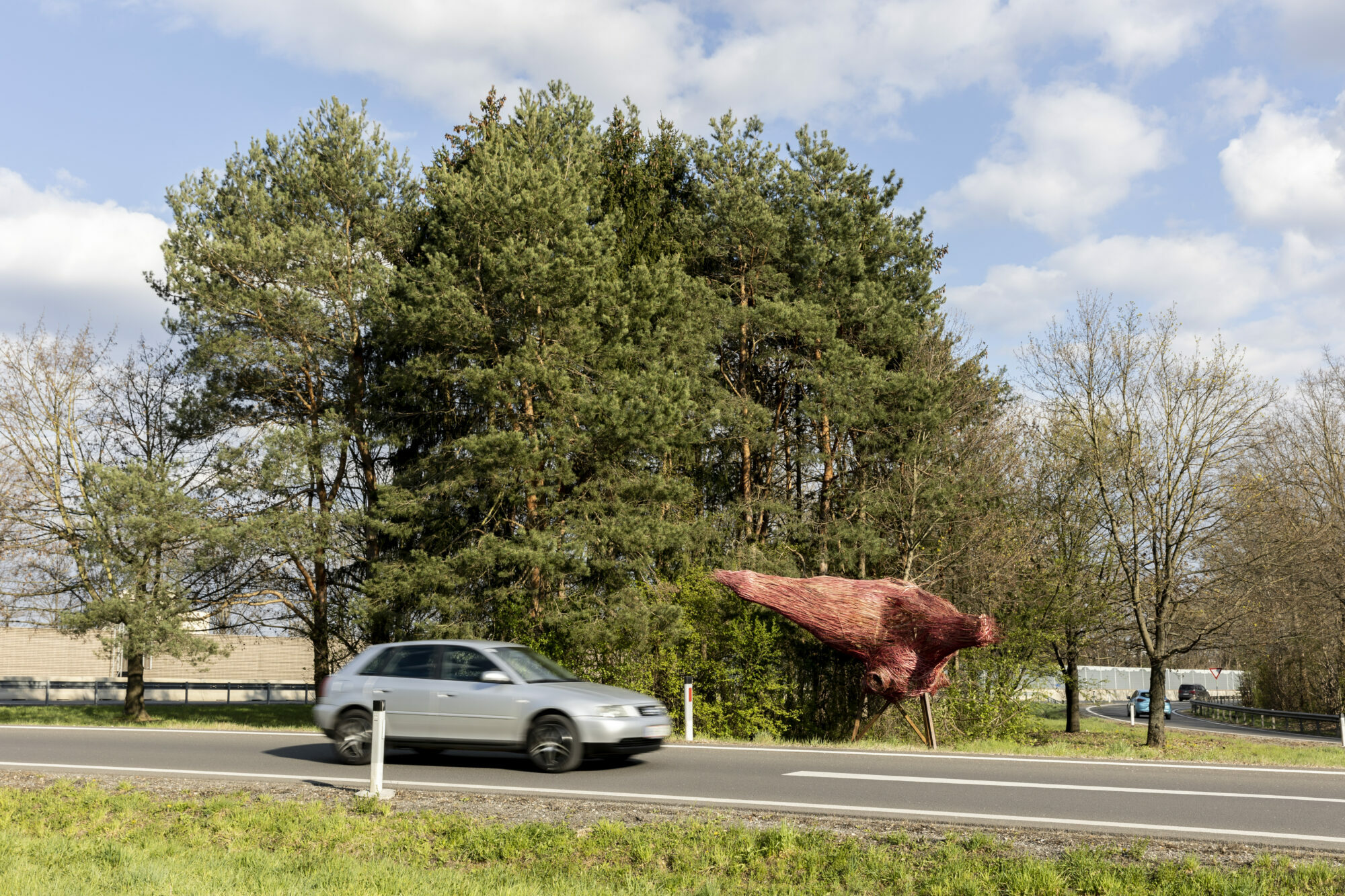
Philetairus socius or the Sociable Weaver A2 SüdAutobahn Knot Graz-Raaba
photos: Nikola Milosević
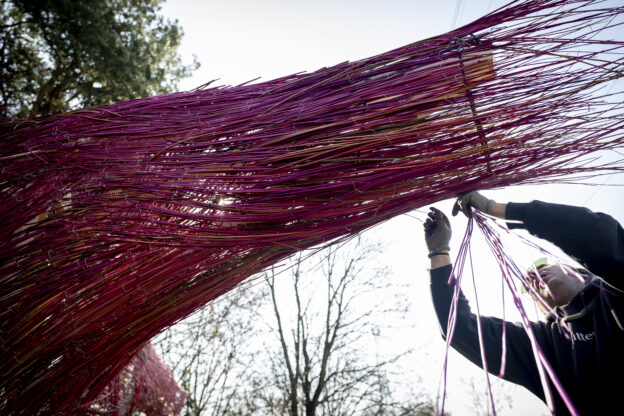
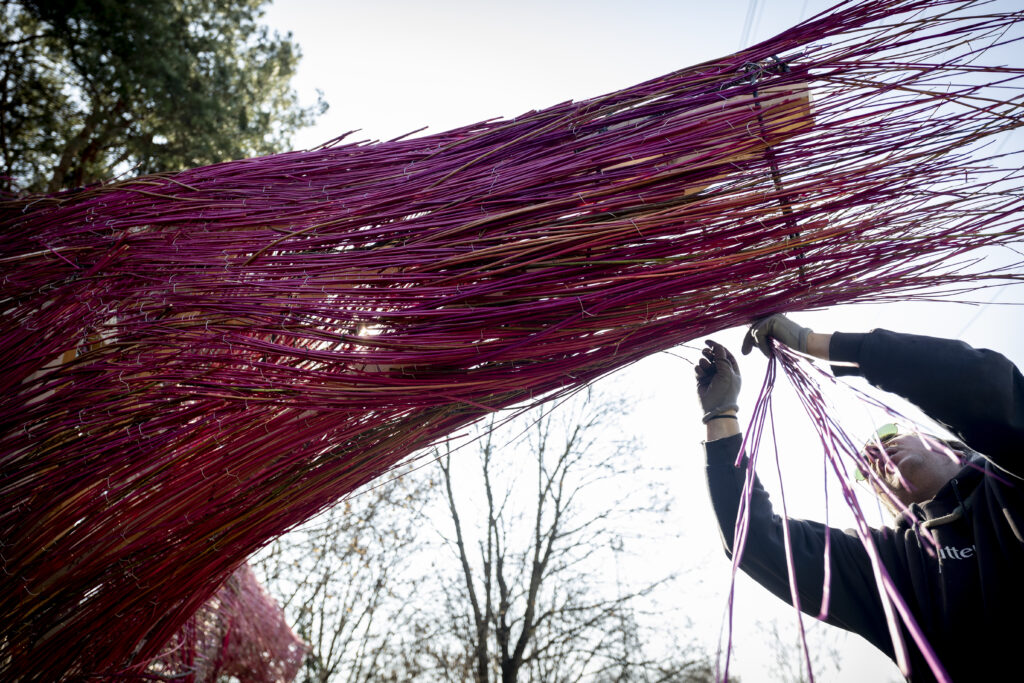
Inspired by the weaver birds, this particular species, called Philetairus socius or the Sociable Weaver, has a remarkable way of weaving its home. They are one of the very few species that create collective, community nests. This collaboratively created sculpture is part of a larger artistic research that searches for more sensitive and careful ways of living together, ways of living and of being that are tuned to natural life and its flows.
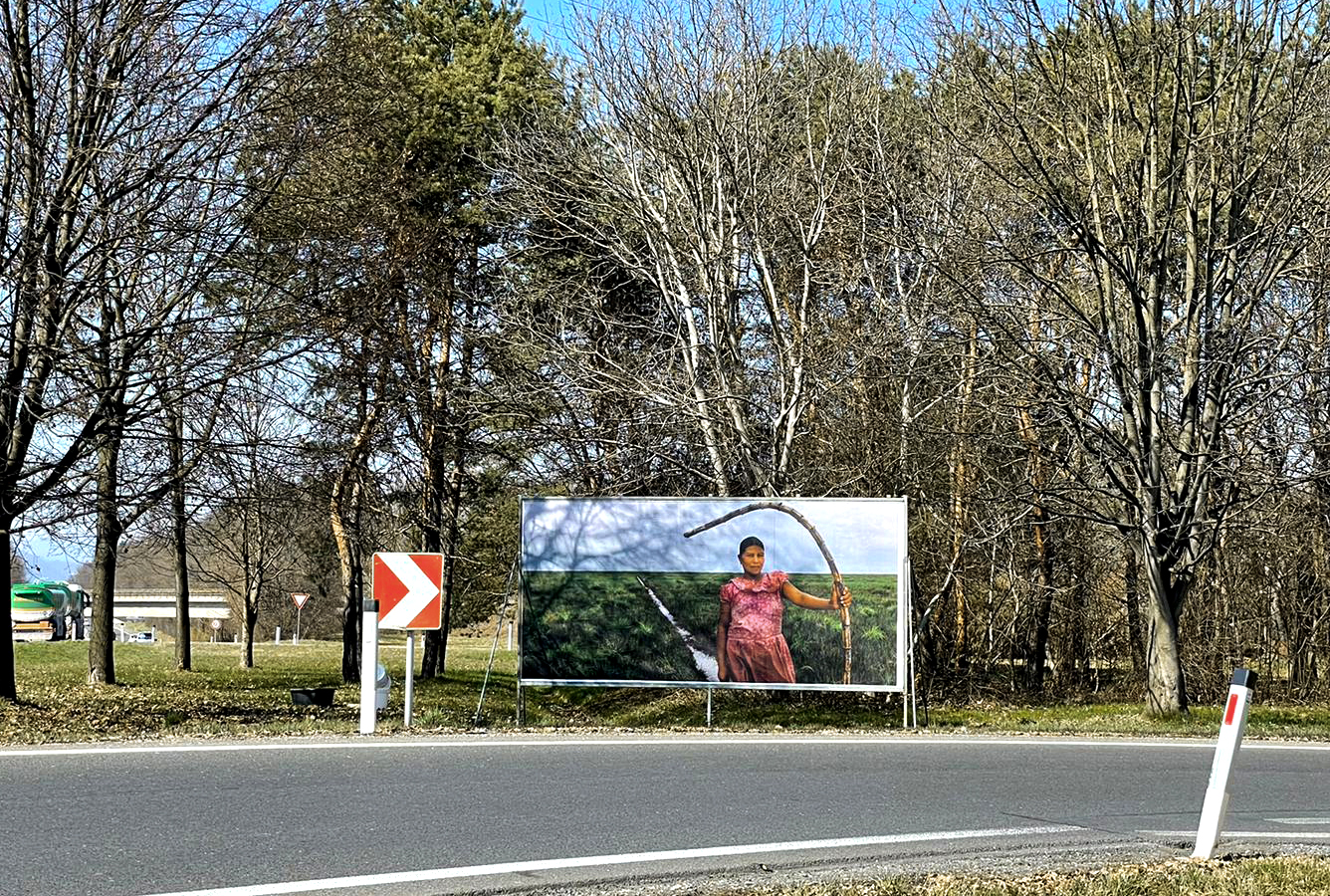
Gods of America • Natural Pantheon, Antonio Briceño Installation in the A2 SüdAutobahn, Graz, (exit Raaba/ St. Peter)
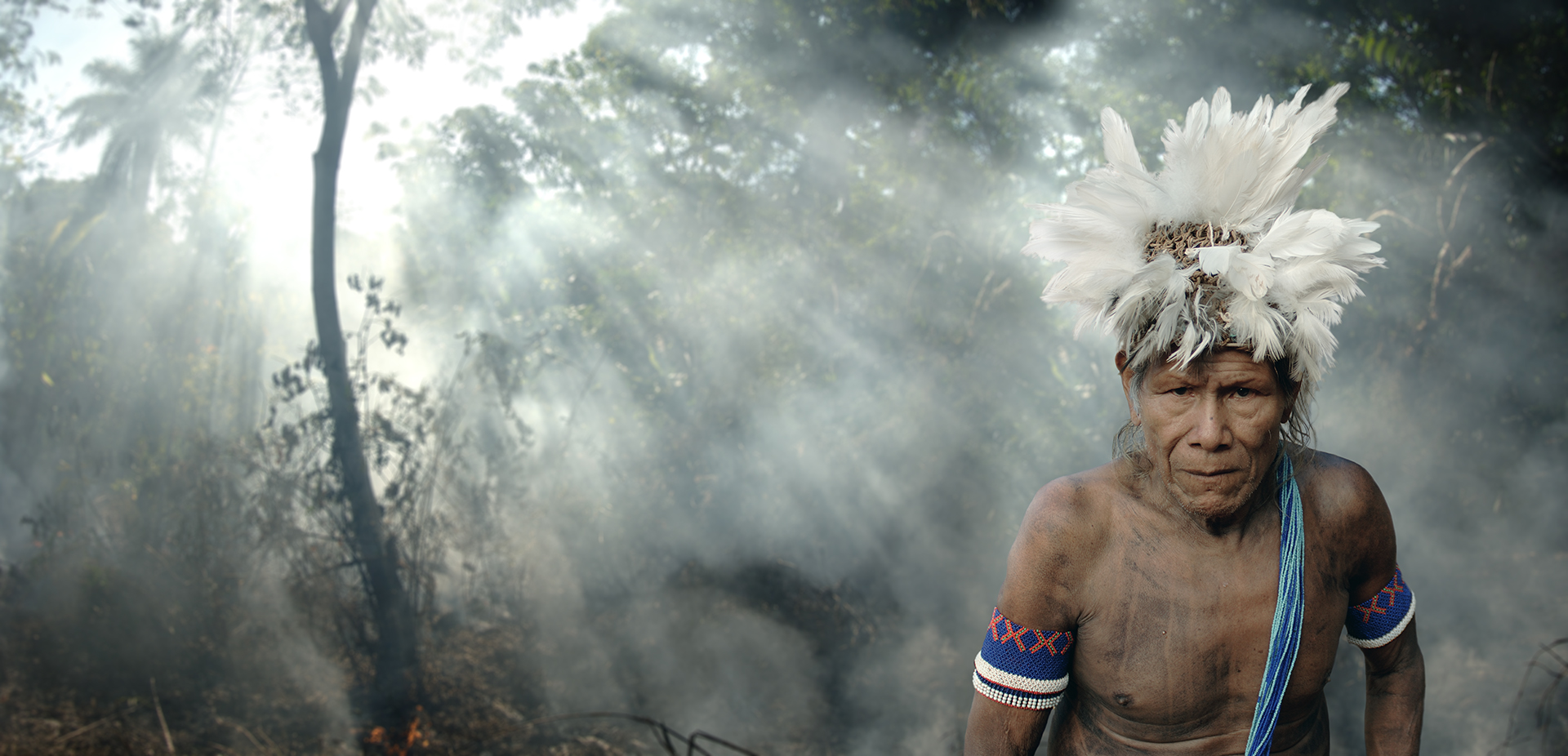
Kumañí – The great mother (Ana Rosa Pérez), 2012 Pumé people, Venezuela – The Keeper of the PathwaysBotoqué – Owner of Fire (Kupato) Kayapó people, Brazil – 2006
The work of Venezuelan photographer Antonio Briceño is committed to deeply understand the diversity of cosmogonies of indigenous peoples throughout Abya Yala (an indigenous name to substitute the colonial name of America). Many of his work depicts the peoples of the Amazonian region – which are continuously under huge threats of the extractivist industries and globalization forces, including mindsets here in the West that undermine their value and their ancestral wisdom. The work of Briceño reconnects us to stories that have not been told, re-enchanting our imaginaries about the South. The opportunity to evoke these deities to visit the tiny forests lost in the South Autobahn of Graz, is a political act and an invitation to discuss the epistemological crossroads we stand in right now.
Abelina Holzer, Andrea Acosta, Andrea Endelhammer, Antonio Briceño, Clarissa Rêgo, Daniela Brasil, Evelyn Tschernko, ILA, Julio Loiza, Karin Lernbeiss, Katcha Bilek, Lisa Reiter, Nayarí Castillo, Otto Oscar Hernández, Peninah Lesorogol, Pinon and Mayra Tatuyo, Ramon Barros, Studio Magic/ Christian Meixner, Judith Urschler, Max Kieninger, Patricia Wess, Thomas Kain, Thomas Kalcher/
A project by Daily Rhythms Collective (Daniela Brasil, Nayarí Castillo) in cooperation with the Afro-Asian Institute in the framework of Graz Kulturjahr 2020